Showing posts with label astrophotography in the philippines. Show all posts

Wednesday, October 8, 2014

October 08, 2014 Blood Moon at the Philippines - An impromptu Astronomical Adventure

Today, we are blessed here in the Philippines to witness a very beautiful natural phenomenon - an eclipse. It's been a long time since I last had a post about my amateur astronomy adventures. Time takes its toll on us all, including me and my hobby. About a year ago, I sold my refractor telescope and now my reflector telescope has a broken tripod leg, improvised finderscope and poor eyepieces so I am not so much inclined to use it.

 Here is my poor reflector telescope in our garage.

Notice the broken tripod leg part in the heavy equatorial mount.


However, our family was very lucky to be given a very beautiful camera from my Aunt abroad. I've used the Canon SX50 HS camera quite a few times during my recitals and performances.

Here is our camera, a recent gift from my VERY generous aunt abroad.

Notice how it says "Canon Zoom Lens 50x IS" around the lens? It's a pretty powerful camera, capable of zooming in quite well and then some more. It also has some manual controls such as aperture and shutter speed control which gives me some settings to use when taking photos. Interestingly, the powerful zoom capabilities of this camera together with some manual control options would also allow me to use this for basic astrophotography without using a telescope. An idea came to mind - why don't I try to use the camera to take pictures of the blood moon using this camera?

I heard of the blood moon the night before on news. My favorite local news program, "24-Oras" reported that the blood moon will be visible in the Philippines on October 8, 2014 at around 6:30 PM - 7:30 PM. So I waited. Sadly, there were heavy cloud covers when I looked up the sky at around 5:30 PM. I was praying that the clouds would clear up in time for the Blood Moon. 

Come 6:30 PM and here's what I saw. Check out these photos of the blood moon. (ISO 6400-0.5 second exposure, aperture between f 3.4-6.5 depending on zoom level)


 Notice that there are two stars beside the moon? I've encircled them in this picture for easier identification.

Man and Nature - A plane passes by.

Now we see the next phases of the eclipse - 3/4 of the moon is covered by the earth's shadow. These pictures are much clearer now because the moon is high above the cloud coverage near the horizon. You can see the shadow getting smaller and smaller as you progress down as we near the end of the eclipse.


 The shadow getting smaller
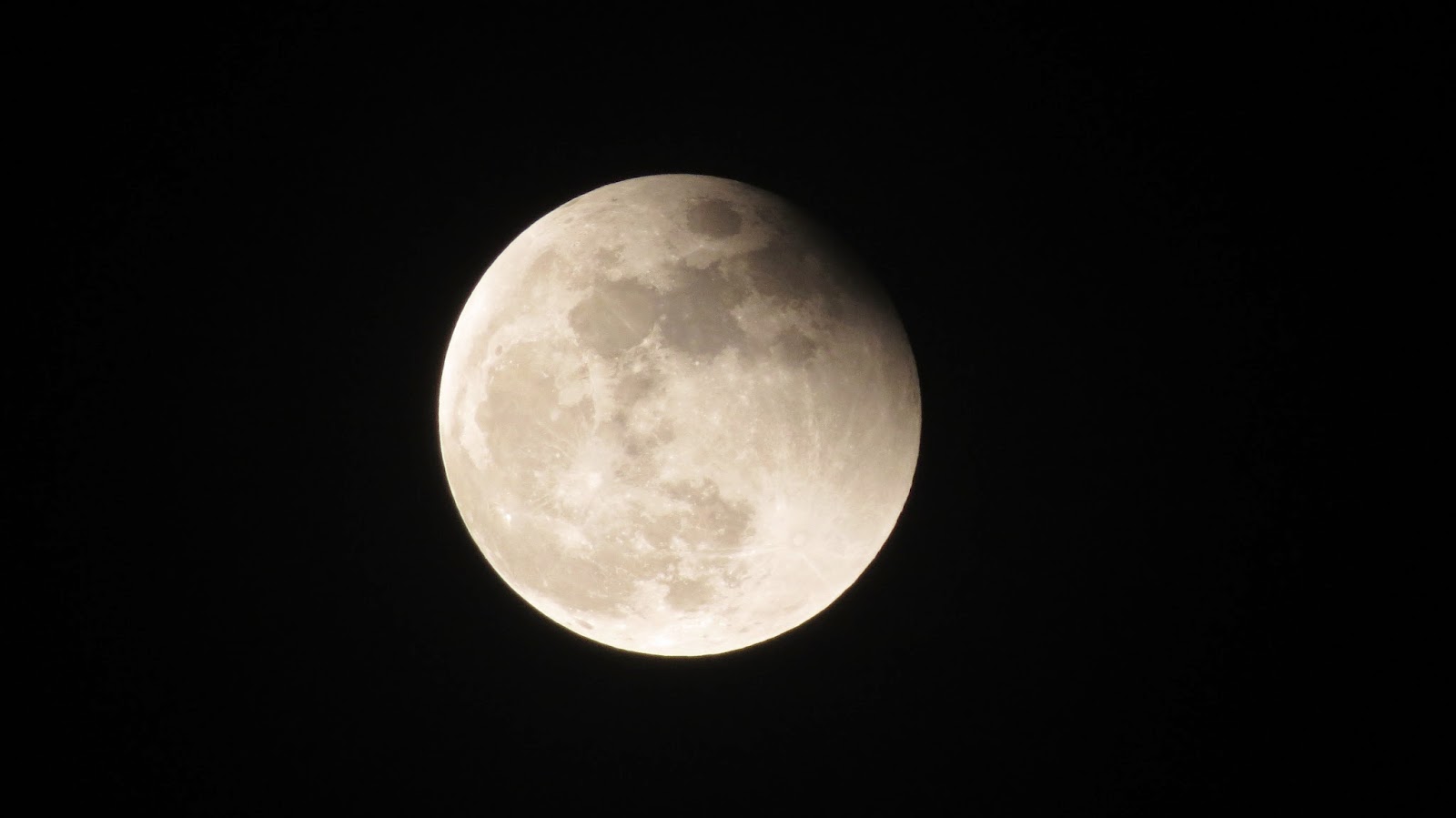
 And smaller....
 And smaller.........
And even smaller.


And there we go! That sums up my blood moon/eclipse coverage as seen from the Philippines on October 8, 2014 from 6:30 PM to 8:30 PM. It was really hard to capture all these images but the amateur astronomer inside me says that I must do it so that I may share it to my fellow amateur astronomers.

Here's a little portrait of how I looked like from the start of the blood moon til the end of my coverage. My arms hurt a bit after the coverage session! Clear skies til our next astronomy event!

Marvin Xylon M. Jaen - Amateur Astronomer-Adventurer

Friday, January 21, 2011

Finderscope Astrophotography

I must say that I am pushing the envelope, so to speak, in my astronomy adventures. A few weeks ago, I set up my telescope to enjoy the clear night and do some astrophotography. However, my simple equatorial mount and astrophotography setup frustrated me because I had to keep adjusting the telescope to track the objects that I am photographing and at the same time adjust the camera to follow the telescope's adjustments - a perfect combination for irritation and frustration. Since everything was manually adjusted and I only have two hands, it was really really hard. Contrary to my statements before, you can indeed be limited by your equipment sometimes - especially if you have the knowledge but not the proper tools to execute and fulfill your plan which is of course, good astrophotography. This was made harder by the fact that I was trying to photograph the Orion's nebula and the Pleiades star cluster which required quite longer exposure times than photos of the moon or videos of the planets.

However, as Newton said, for every action, there is an equal and opposite reaction. And in this case, I did not want to sleep without getting good astrophotos. This is where the finderscope gets in. Since the finderscope is a low power scope with a wide field, I wont have much trouble adjusting since it does not magnify the subject and its movement. Thus, finderscope astrophotography was born. For these photos, I am using my new Canon A495 digital camera (a Christmas gift from Maureen Santos) mounted on a generic camera tripod and my 6x30 finderscope which is of excellent quality.

Here was my setup for the night.
I brought out my two telescopes to be able to do a comparison but it was such a hassle to use my two primary telescopes because I had to adjust them from time to time manually which led to blurred photos. However, I must note that my two primary telescopes are very good performers. Its just that I do not have the proper camera adaptor and motor drive to move up to the next level of astrophotography - deep sky astrophotography.

Finderscope Astrophotography Setup

Finderscope Astrophotography Setup

Finderscope Astrophotography Setup

This setup may look simple but I was surprised with the results. Sadly, I am having troubles with image processing at the moment so I will instead post the individual images that I took during the night for your reference. All photos were again, taken with a Canon Powershot A495 Digital Camera at ISO 400, exposure times : 8 seconds or 10 seconds (yes, my camera does allow long exposures but not control of aperture - you can check out the specifications on the internet).

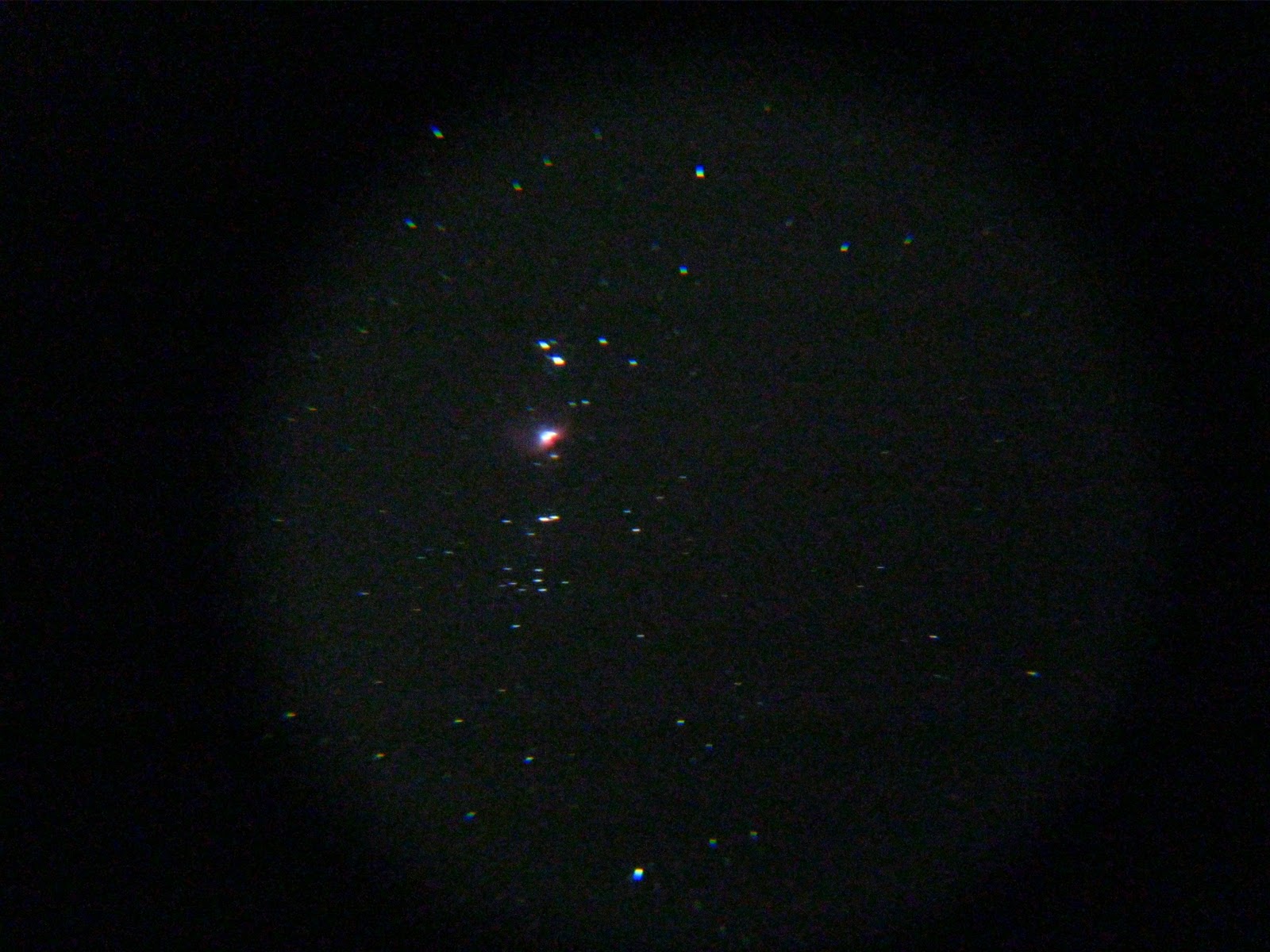
Here are the photos of the Orion nebula as seen through the finderscope's rich field of view. All images are unedited and are JPEGs straight from the camera.


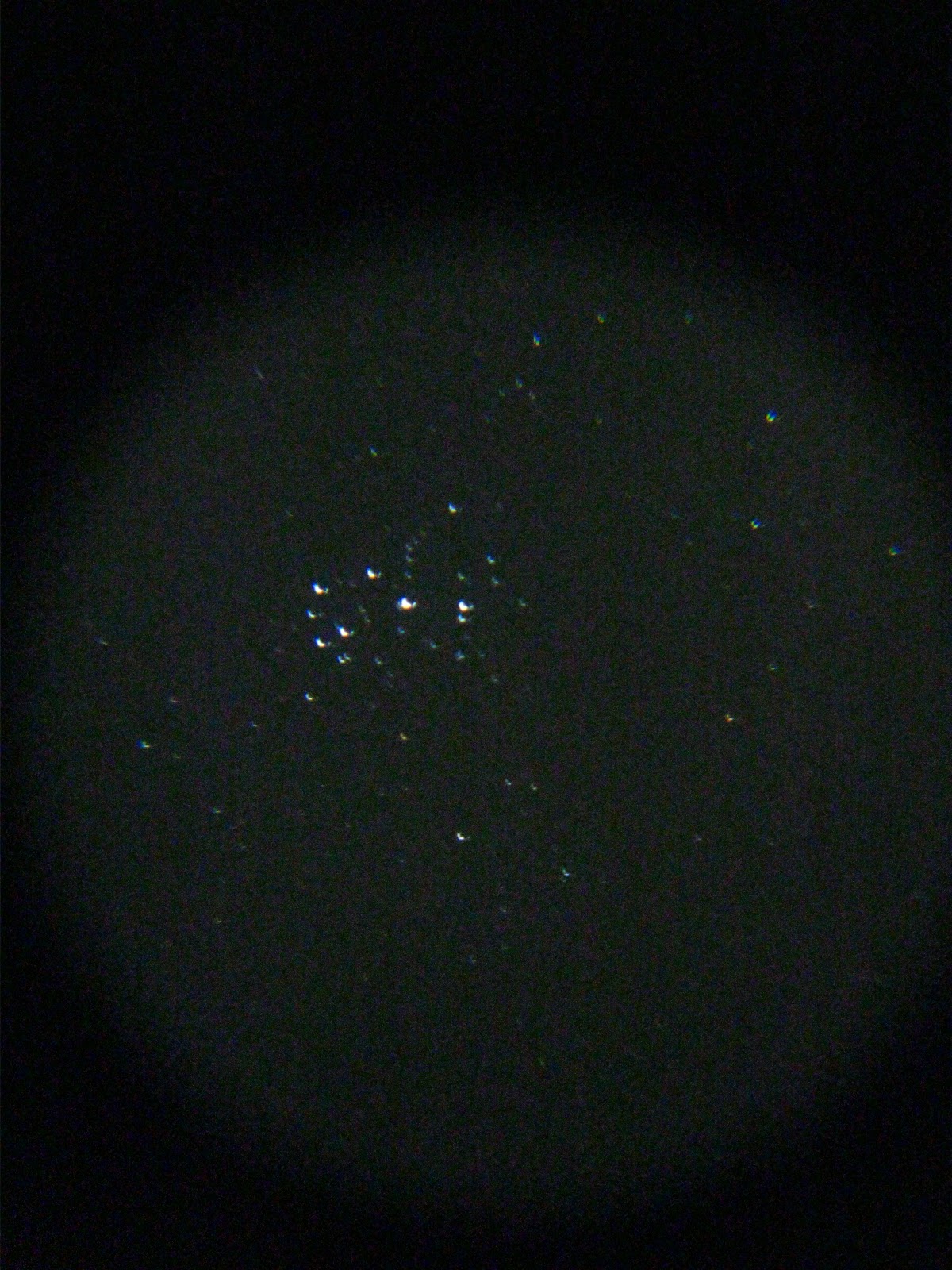
And here are photos of the Pleiades star cluster. Again, the finderscope's rich field of view positions the Pleiades perfectly. All images are unedited and are JPEGs straight from the camera.


And finally to top everything off, a picture of myself doing what I love during the night!


Equipment does matter sometimes but if you have passion and a bit of imagination, you can do something with very very limited equipment - even a 6x30 finderscope which I'm sure is underestimated by the majority of people. Its not about equipment - its about you and how you find a way to do things.